
From Ribbon Cutting to Runoff: The Seawall & Baywalk Trash Can Saga
It began, as many things in Brickell do, with a celebration.
In 2023, city officials, stakeholders, and community members gathered along the seawall behind 601 Brickell Avenue to mark the grand opening of a long-anticipated segment of the Baywalk. The ribbon cutting symbolized progress, another step toward a continuous, world-class waterfront experience in the heart of Miami’s financial district.
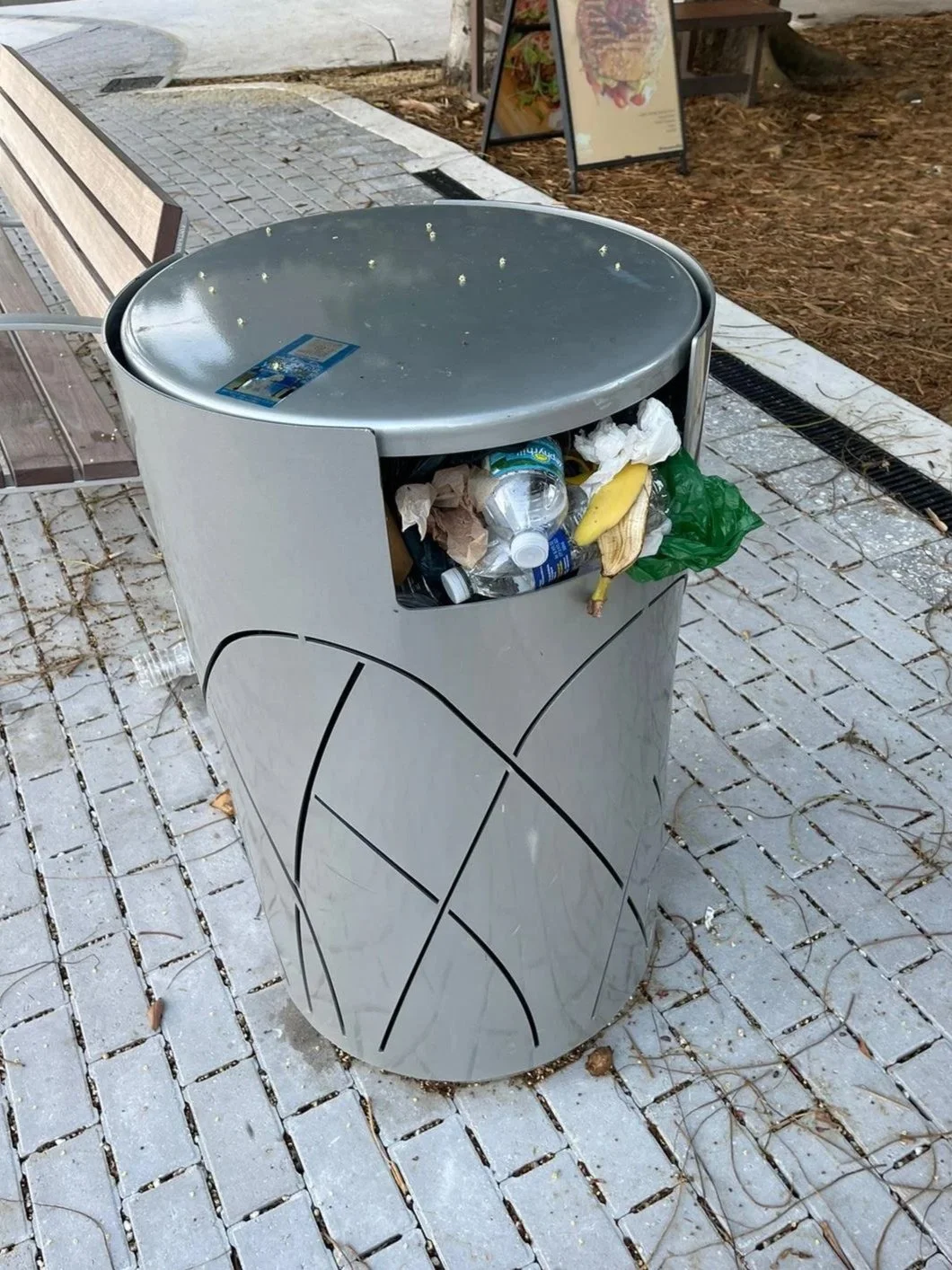
But not long after the applause faded, a more familiar issue resurfaced: overflowing trash cans.
At first, there were two receptacles placed along this stretch of the Baywalk, seemingly adequate for the steady flow of pedestrians, office workers, residents, and visitors. However, as usage increased, so did the volume of waste. Overflow became a recurring problem, raising concerns from residents and adjacent property owners.
What’s become increasingly clear is that long-term maintenance may not have been fully thought through.
In a 2023 communication, the City confirmed that litter containers in the area had been serviced following complaints, but also acknowledged a key limitation: Solid Waste was not in a position to service these bins on a regular basis. What began as a short-term response to overflowing trash quickly exposed a larger issue because there was no sustainable plan in place to support ongoing maintenance.
Instead of addressing the service gap, the solution ultimately became removal.
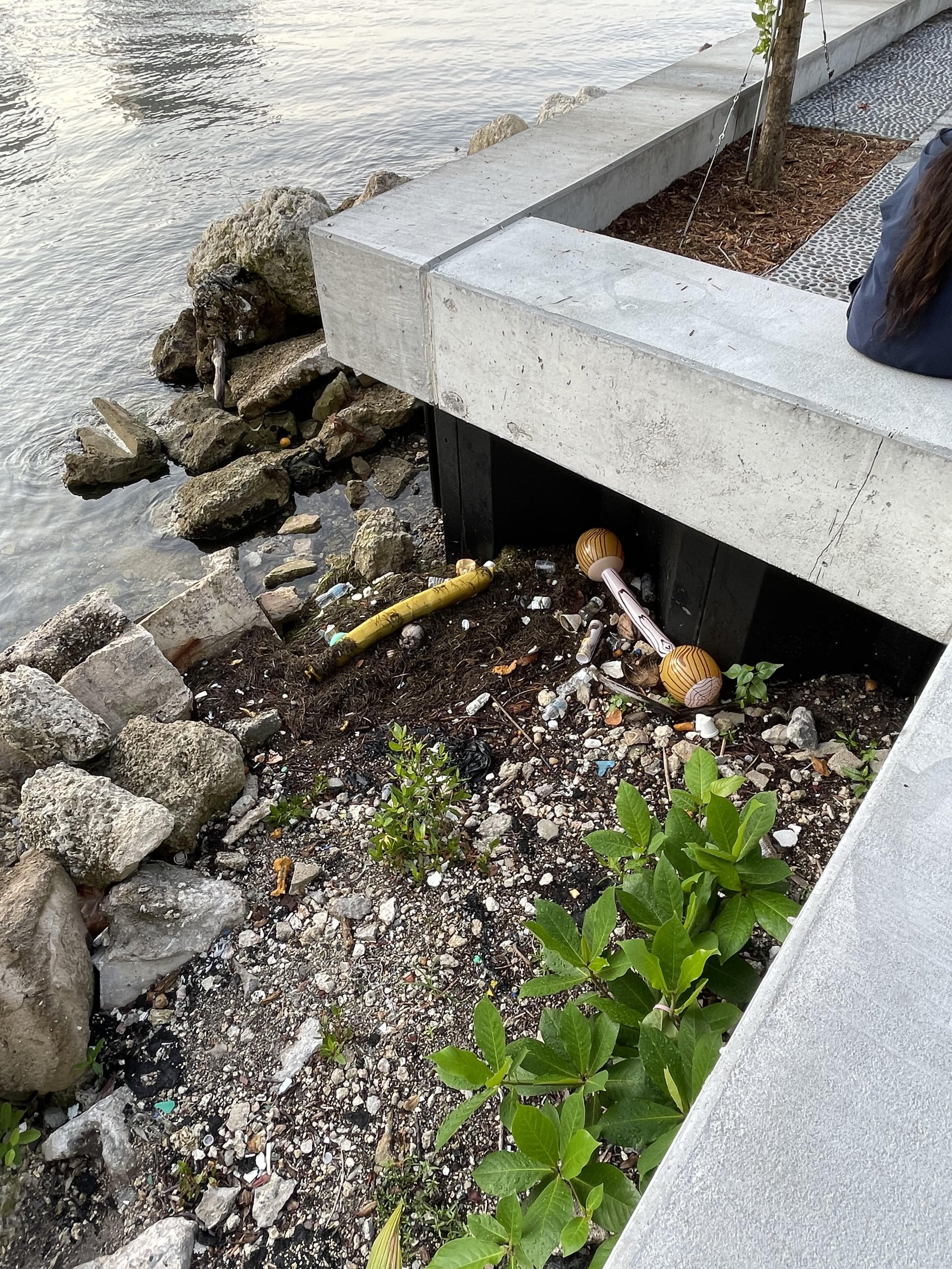
In August of 2023, the City removed its trash cans altogether, shifting the burden to neighboring receptacles and contributing to increased runoff into the bay.
More recently, in April 2025, the adjacent bank followed suit, removing its own receptacle earlier this week.
The result? A City activated waterfront promenade… with nowhere to throw trash.
Residents and regular users of the Baywalk have quickly noticed the consequences. Without accessible disposal options, litter is no longer just an eyesore, it’s making its way directly into Biscayne Bay. What was once an issue of overflow has evolved into one of absence, and now, environmental impact.
This ongoing issue along the Baywalk in front of 601 Brickell Avenue highlights a broader challenge: how do we maintain public spaces that are both heavily used and responsibly managed?
To date, concerns have been shared with newly elected City of Miami Mayor Higgins, District 2 Commissioner Pardo’s office, and Chairman of the DDA, Commissioner Rosado, requesting that trash cans be reinstated. There is also a request that a coordinated site visit with the City and community stakeholders would be a productive next step.
The Baywalk is one of Miami’s most valuable public assets, a space meant to connect neighborhoods, promote walkability, and celebrate our waterfront. But without basic infrastructure like trash receptacles, even the best-designed spaces can fall short.
What began with a ribbon cutting on the seawall has now become a test of follow-through.
The question is no longer whether the Baywalk should be maintained it’s how, and by whom.
And until that’s resolved, the tide will keep carrying the consequences.