
After residents reported sediment in Biscayne Bay following the weekend’s heavy rain, BHA began gathering information to better understand what happened and how our neighborhood’s drainage system works. We’re sharing what we’ve learned to help residents understand how runoff reaches the Bay, how the City responds, and where to report concerns.
What happened?
Following intense rainfall over the weekend, residents reported sediment in Biscayne Bay near the stormwater outfall at SE 12th Street and Brickell Bay Drive. According to information provided to BHA, a City of Miami inspector identified the Santander construction site as the source on Monday, November 2, 2026. A fence on the site was not properly secured, allowing sediment to enter the drainage system.
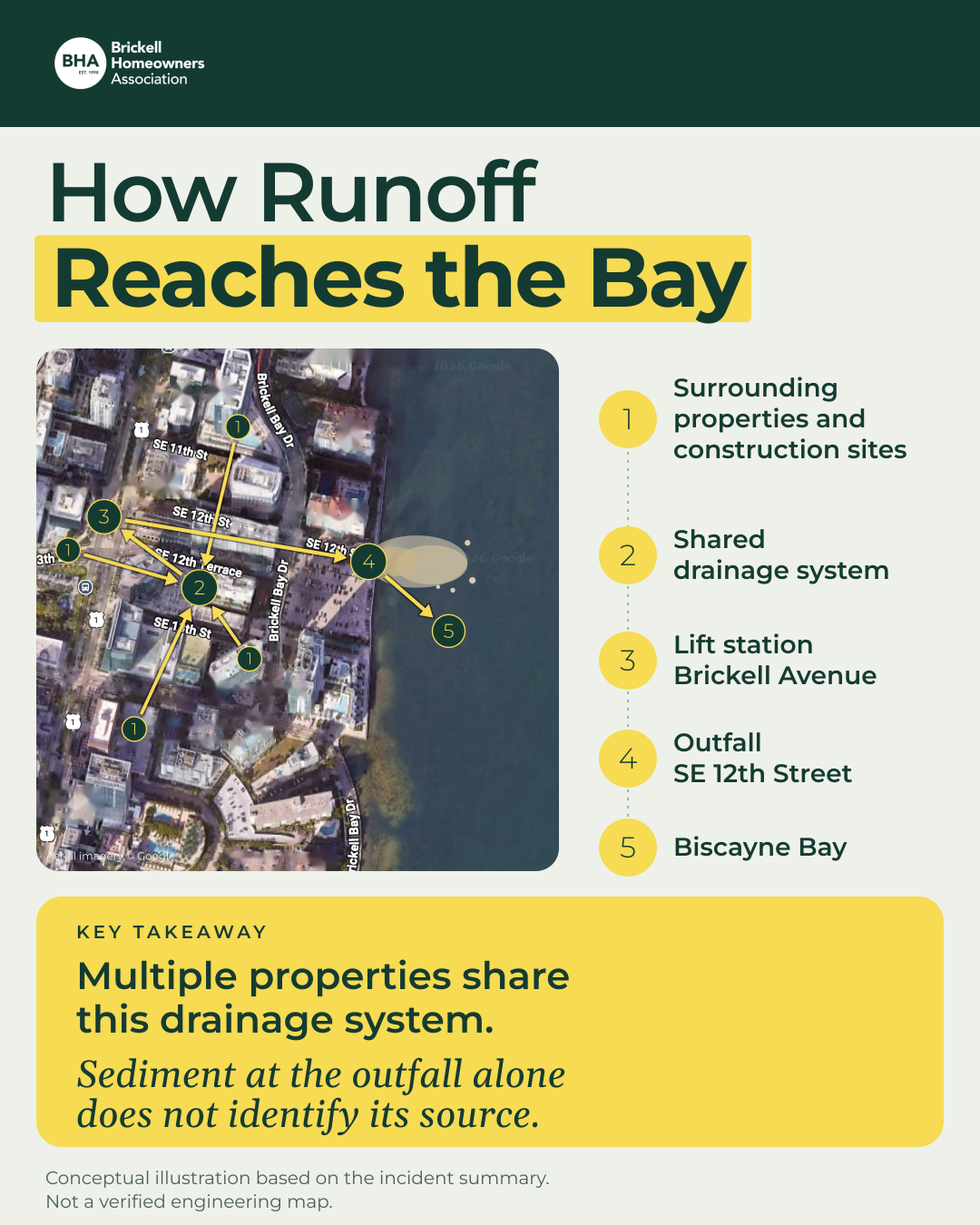
The outfall marks where sediment entered the Bay; tracing the drainage system identifies where it originated.
How runoff reaches the Bay
Rainwater can pick up loose soil and other material as it moves across streets, sidewalks and construction sites. When that material enters a storm drain, it can travel beyond the property where it began.
The drainage explanation shared with BHA describes a system connecting surrounding properties to the SE 12th Street outfall through a lift station on Brickell Avenue. This is a conceptual description; the precise connections and pipe routes require confirmation against drainage records.
Because multiple properties share the drainage system, identifying a discharge’s source requires looking beyond the outfall. In this case, the information provided to BHA identifies the Santander construction site as the source.
Following up on Santander
The Santander site was fined $500 and given time to correct the problem. The contractor is responsible for securing the fence and correcting the conditions that allowed sediment to escape. The City identifies violations and enforces compliance; it does not perform the contractor’s corrective work.
A fine alone does not establish that the problem has been corrected.
If residents observe a new or continuing discharge, they should report it again using the contact information and reporting links below. Include the date, time, exact location and new photos or video. If available, reference the earlier report or case number and explain whether the discharge has continued or returned. Report what is visible without assuming that every new plume has the same source.
How residents can help
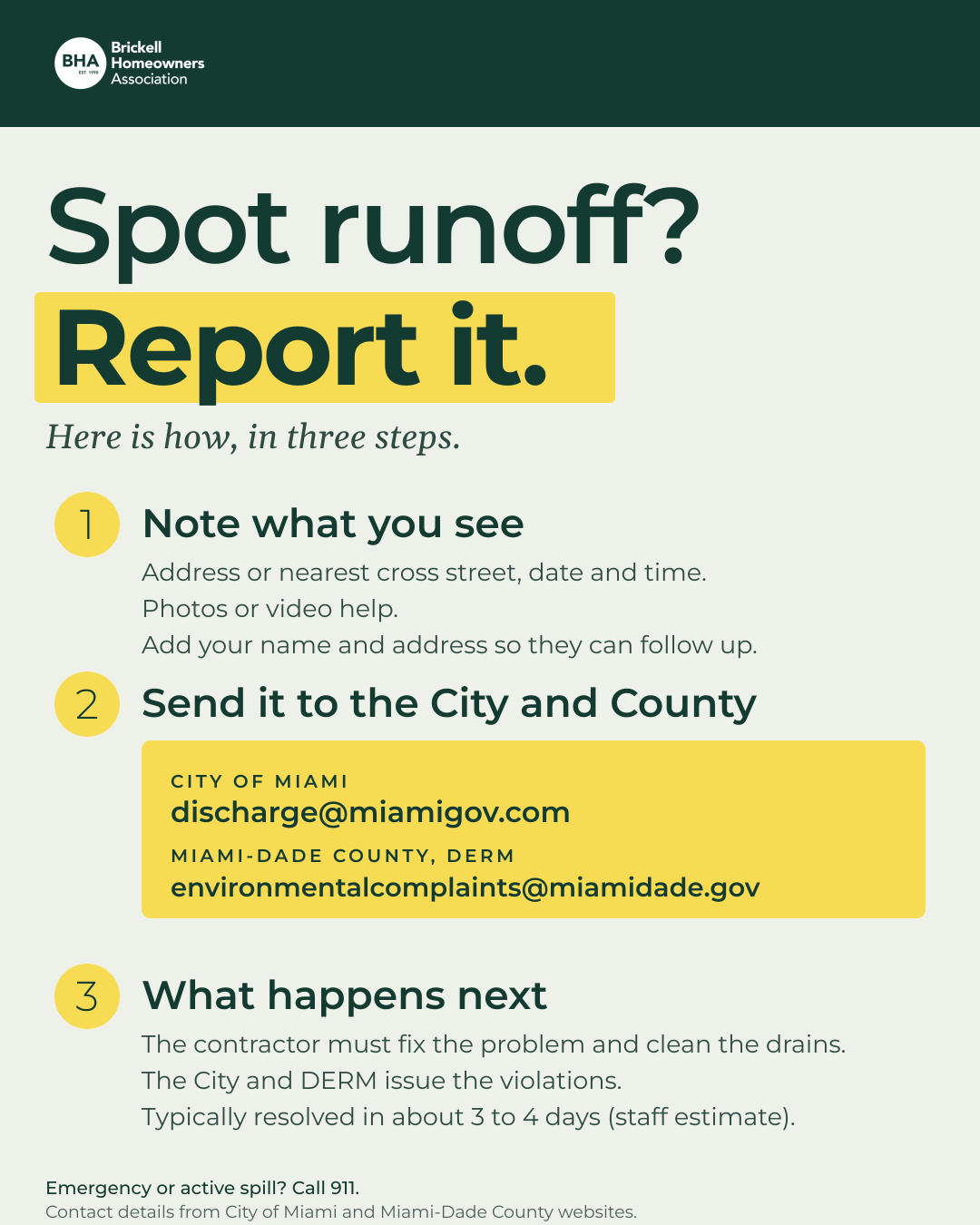
If you see cloudy water entering the Bay or a suspected discharge into a storm drain, document what you can safely observe. Record the date and time, the address or nearest cross street, and the location of the drain or outfall. Photos and video showing both the water and its surroundings can help investigators.
Report suspected pollution to Miami-Dade County DERM at 305-372-6955 or use the County’s Environmental Complaints page. The phone line accepts reports 24/7, but a live answer is not guaranteed. According to the hotline’s recorded message, voicemails are reviewed the next business day. DERM specifically accepts reports of cloudy discharges into Biscayne Bay.
Include your name and address if you want the complaint to proceed without the restrictions that apply to anonymous reports. DERM explains those requirements on its complaint page.
For street flooding or a suspected clogged storm drain, use the City’s FloodTracker or 311 reporting options. For emergencies, call 911.
Keeping the focus on the Bay
Residents do not need to establish who caused a discharge before reporting what they see. Emailing the responsible City and County agencies with a clear location, timely photographs and a factual description gives staff the information they need to follow up. Social media can raise awareness, but a post does not replace a report submitted directly to those agencies. Careful reporting helps focus attention on identifying the source, correcting the problem and protecting Biscayne Bay.