For Brickell condominium communities, good governance has a direct impact on household budgets and confidence in building leadership. When an association misses an obligation or fails to respond to a regulatory notice, the consequences can affect the entire community.
On November 12, 2026, Florida’s new Rule 61B-21.0026 and amended Rule 61B-21.002 take effect. These rules address citations and notices of noncompliance for condominium associations controlled by unit owners. The effective dates are confirmed in the state’s official listings for Rule 61B-21.0026 and Rule 61B-21.002.
For BHA’s member communities, this is a timely reason to review how boards and management teams track obligations, receive official correspondence, and document compliance.
What changes
The citation procedure implements authority already provided under Section 718.501, Florida Statutes.
Under the new procedure:
- The Division may issue citations for violations of Chapter 718, applicable Title 61B rules, or failure to timely comply with a Notice of Noncompliance.
- Service generally goes to the association’s registered agent, with alternative service provisions when none is identified. Failure to receive actual notice does not invalidate otherwise compliant service.
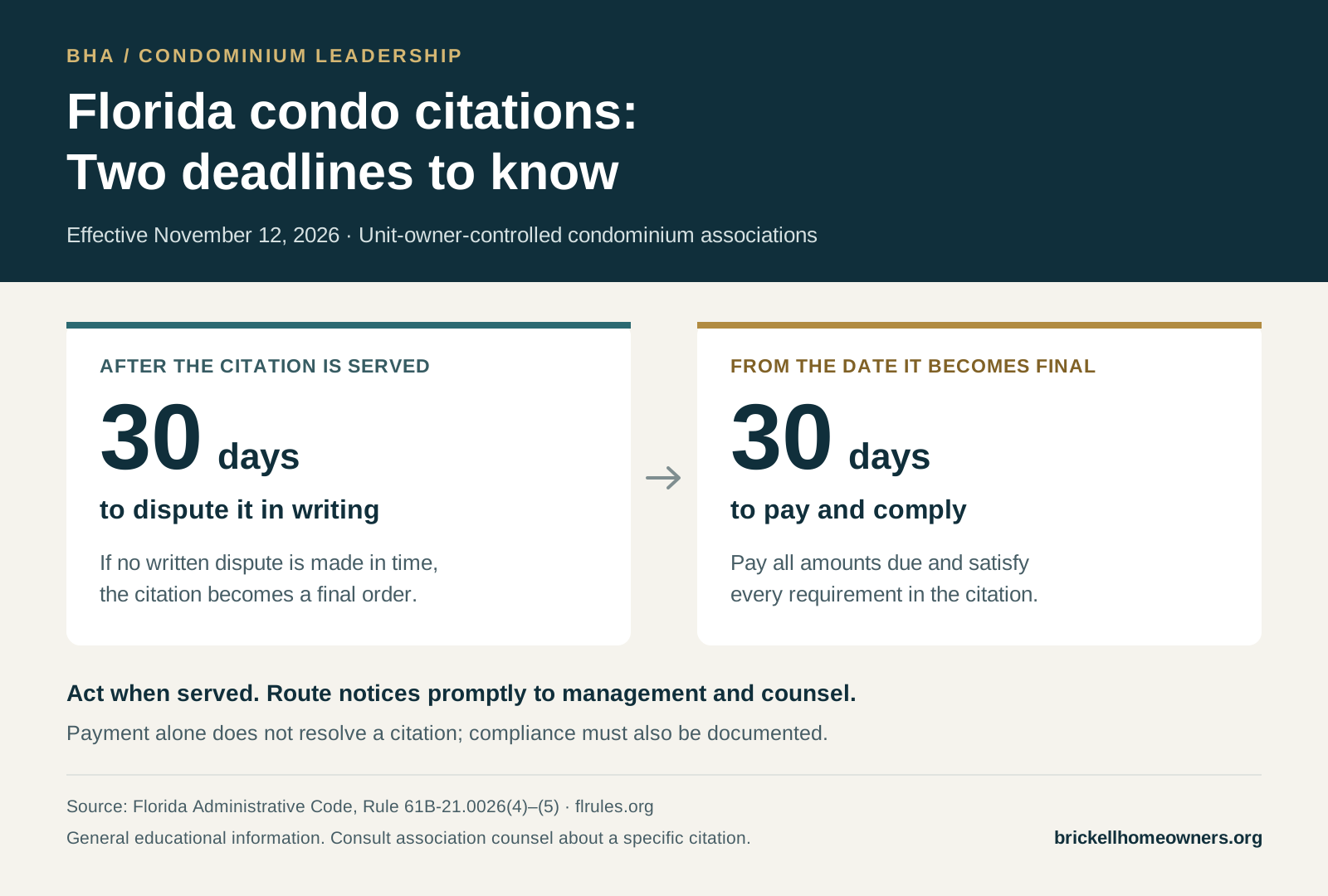
- A citation becomes a final order if it is not disputed in writing within 30 days after service.
- The respondent then has 30 days to pay amounts due and satisfy the citation’s requirements. Resolution requires payment and documented compliance.
These procedures appear in the state’s published rulemaking text, pages 3291–3292.
Why this matters
An association penalty draws on resources that support the condominium community. Preventable violations can also create additional management work, professional expenses, and friction between owners and their boards.
Owners deserve understandable financial information and confidence that their association takes its obligations seriously. Volunteer directors need dependable systems and access to qualified guidance to fulfill those responsibilities.
BHA’s role as a connector among condominium communities creates an opportunity to share practical lessons, identify recurring questions, and bring implementation concerns to state officials.
Practical steps for association leaders
Boards should work with management and association counsel to:
- Verify registered-agent information and establish prompt forwarding of official correspondence.
- Maintain a shared compliance calendar with a responsible person and backup for each obligation.
- Review financial-report preparation and delivery procedures.
- Preserve records showing when required actions were completed.
- Route any citation immediately for review and track its response deadline.
These are recommended management practices. Each association should confirm its particular obligations with its professional advisers.
An advocacy priority: accountability with practical support
A useful BHA advocacy agenda would ask DBPR and state policymakers for accessible guidance, practical training for volunteer directors, consistent enforcement, and clear explanations of how associations can correct violations and document compliance.
Enforcement should advance owner protection and lasting compliance. Its effectiveness should be measured by whether communities receive required information, correct problems, and improve their governance.
Brickell’s condominium leaders can help shape that conversation by sharing recurring questions and implementation challenges through their BHA representatives. Those experiences can inform future educational programming and advocacy.
Strong condominium governance protects the people who call Brickell home. Preparation now can help associations meet their responsibilities and preserve community resources.
This article provides general educational information. Association-specific questions should be reviewed with qualified Florida condominium counsel.